
When you book a professional photographer, you may hear the terms posed and candid photography.
But what do they actually mean?
And do you really need to choose one over the other?
The simple answer is no.
Good photography often combines direction with observation, depending on what you are trying to achieve.
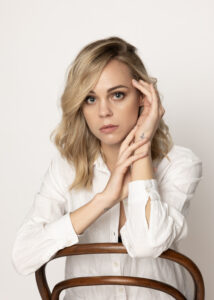 What is posed photography?
A posed photograph is deliberately arranged by the photographer.
That might mean deciding where someone stands, how they are positioned, where they look or how a group is arranged. Lighting, background and composition are also carefully considered.
This is particularly useful when you need a photograph that is intentional, polished and consistent.
Corporate headshots are an obvious example. When photographing a team, you want each person to have a similar look so that the images work together across your website and LinkedIn.
Posed photography is also useful for group photographs, portraits and important photographs where everyone needs to be in the right place at the right time.
And posed does not have to mean stiff.
A good photographer will give you enough direction to create a strong photograph while allowing you to relax and look like yourself.
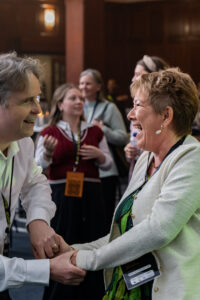 What is candid photography?
Candid photography is more observational.
Rather than arranging every part of the photograph, the photographer watches what is happening and captures genuine interactions, expressions and moments as they unfold.
This might be people talking during a meeting, colleagues working together, guests arriving at an event or someone concentrating on what they are doing.
Candid photographs can add movement, personality and atmosphere to a collection of images.
And they do not always have to show someone’s face.
Hands working, equipment being used, people moving through a space or a close-up of part of a process can all help tell the story.
Candid does not mean accidental
There is a common idea that a candid photograph is simply a photograph taken without the subject knowing.
In professional photography, it is a little more considered than that.
The photographer is still making decisions about light, composition, timing and where to position themselves. The difference is that the moment itself isn’t being formally arranged.
That is what makes these photographs feel natural, even though there is still a great deal of thought behind them.
 Why a good photography session often needs both
The most useful image collection is rarely made up entirely of posed or entirely of candid photographs.
A business, for example, might need:
Professional headshots for LinkedIn and the company website.
A team photograph where everyone is deliberately arranged.
People at work showing what the business actually does.
Natural interactions between colleagues or clients.
Details and environmental photographs that show the workplace, products or branding.
Events and weddings usually benefit from both formal and candid coverage.
Events and weddings work in much the same way. There may be formal group photographs, speakers, family photographs or important moments that need direction, alongside natural photographs of guests, conversations and the atmosphere of the day.
A wedding, for example, might include carefully planned family and couple portraits alongside completely unprompted moments that happen throughout the day.
Sometimes the best photographs are somewhere in the middle
Not every photograph fits neatly into one category.
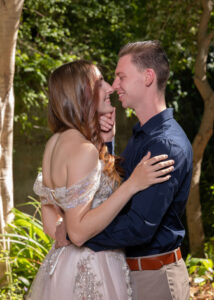
A photographer might place someone in a particular position because the light is better, give a little direction and then allow the person to interact naturally.
The resulting photograph may look completely candid, even though the photographer has carefully created the conditions for it.
This is particularly useful when photographing people who are not used to being in front of a camera.
You don’t need to know how to pose.
You don’t need to know where to stand.
That’s part of the photographer’s job.
 So which approach is right for you?
It depends on what you need the photographs to do.
Headshots generally need more direction and consistency.
Personal branding and business portraits can benefit from a mixture of directed and natural photographs.
Workplace photography often works best when the photographer observes people doing what they actually do.
Events usually need both formal and candid coverage.
The important thing is not whether a photograph is technically posed or candid. What matters is whether it communicates something useful and feels authentic to the people and business being photographed.
At Emil Bosch Photography, we combine careful direction with natural, observational photography to create images that feel polished without looking forced — whether we are photographing a person, a team, a workplace or an event.